A few years ago, film for advertising on cars was not widely used, and even more so, it was not in high demand among marketers and PR specialists. Many experienced car owners did not know about the existence of special self-adhesive tapes, and therefore did not use them even for personal purposes. However, in parallel with how the advertising market developed and "bloomed", and the competition between brands moved to a qualitatively new level, car branding became a particularly popular means of promoting one's own company.
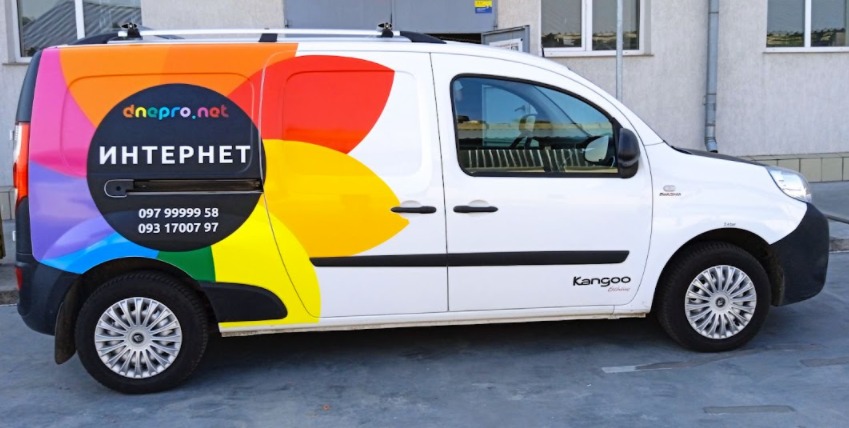
An important condition for the success of such a PR campaign is the high quality of graphic printing. It is necessary to decide which film for the car to choose based on many different factors, including taking into account the type of advertising chosen in advance for distribution.
Some customers prefer to apply only the company logo on the car body, others believe that full pasting with the aim of creating public resonance works more effectively. In any case, the advertising film for the car should be dense and wear-resistant. On the modern commodity market, similar products are presented in a variety of designs, let's consider each category in more detail.
Types of films for car branding and their features
In order to understand how to choose a film for a car, you need to delve into the issue under review as much as possible, familiarize yourself with the production technology of these products in advance. According to the method of production, the following types of advertising films are distinguished:
- cast: quite thin (from 50 microns), highly elastic due to minimal internal tension, easily applied to the specified surface and easily removed. They are very popular due to their intrinsic properties and long service life.
- calendered: in terms of thickness, there are options starting from 70 microns. Elastic and flexible, so they fit the curves well, but they are prone to shrinkage. If this moment is not taken into account in advance, bubbles and cracks may form on the surface of the vehicle over time (especially around the edges of the body).
Within the framework of the above classification, there are other, more specific types of films for advertising, which differ among themselves by the material of manufacture:
- monomeric;
Belongs to the calendered group. It is distinguished by the complete lack of elasticity and the difficulty of stretching. At the same time, it is resistant to temperature changes, does not stretch both in warm conditions and in the cold. It must be applied immediately in a single layer, due to which craftsmen often face the problem of internal air bubbles, which must be eliminated immediately. The main advantage of such a product is its affordable price.
- polymeric;
Belongs to the calendered group. During the production of this material, manufacturers add an additional substance to the chemical composition - a polymer plasticizer, and therefore the film stretches, but not really well. However, it will still shrink later (the risk of shrinkage peaks between 6 and 12 months after pasting). Specialists believe that this version of the product is optimal in terms of price-quality ratio, and therefore they often turn to its use. Taxi styling is usually done using this type of adhesive tape.
- cast vinyl.
Such a film for car branding does not shrink and stretches well, it withstands sudden temperature changes (from -15 to +80 degrees), does not react to the effects of chemicals that can be used during car washing. In addition, it is simply to install, retains bright color and clarity of graphics throughout the entire period of use.

The branding procedure has gained wide popularity, both in Ukraine and around the world. Owners of private companies and corporations often turn to specialists with a request to transform the office space by stylishly and neatly decorating the windows. Representatives of the Kaplun Global company build cooperation with each client individually, decoration of office glass is done quickly, but methodically, in accordance with current quality standards and safety requirements.